
Homosexuality is not a sin says Pandit Ravi shankar

Don’t think something is wrong with you’: Sri Sri Ravi Shankar to man who faced abuse for being gay

The spiritual leader said that one’s sexual orientation is not a permanent thing and might change, while answering a question at a lecture at JNU..
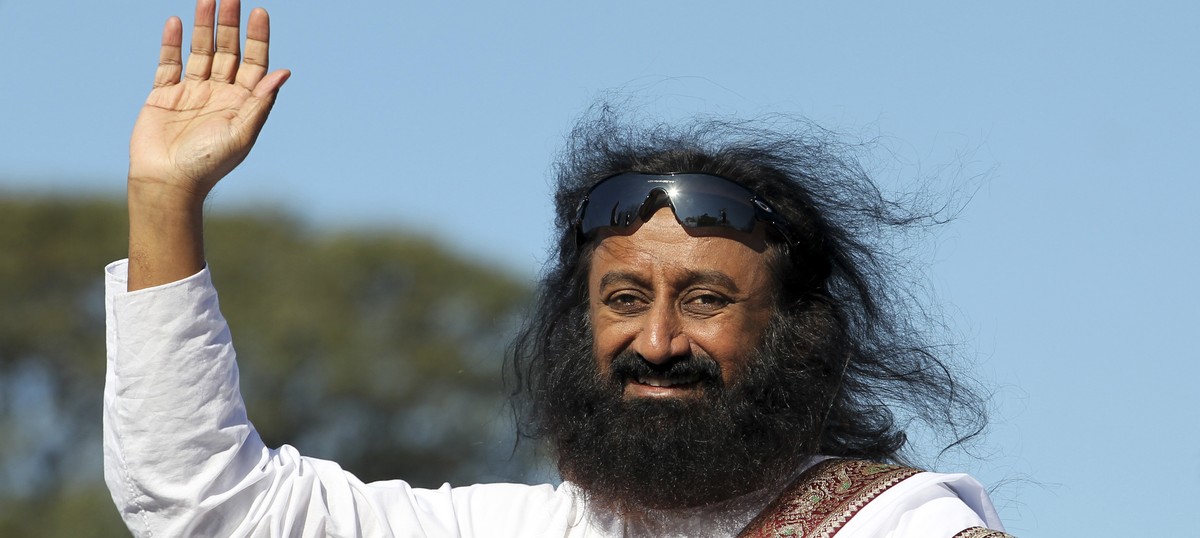
Spiritual leader Ravi Shankar on Monday said being homosexual or heterosexual is a tendency that may change. He made the statement at the Jawaharlal Nehru University in Delhi after a student asked how he should handle the way his friends and family “mistreat” him because he was homosexual.
“You treat yourself better, doesn’t matter how others treat you. You don’t think you are sick or something is wrong with you,” he said. “If you stand up, nobody can insult you, but...if you feel bad about yourself, nobody can make you feel better,” he told the student. “This is your tendency now...just acknowledge it, accept it, and know that this tendency is not a permanent thing. It may change. I’ve seen many men who were gay later turn into heterosexuals, and there are those who are normal, who are called straight people, end up being gay later in life. I would like you to focus beyond the body identity.”
Ravi Shankar was at JNU to deliver the 13th Nehru Memorial Lecture.
When another student asked him what they could do to shed the “anti-national” tag they had “because of a few students”, he said: “Some youths have a tendency to rebel. Just because they’re talking differently, don’t think they’re anti-national. Don’t brand them.”
Ravi Shankar had said on Monday that he will visit Ayodhya in Uttar Pradesh on November 16 and meet Chief Minister Adityanath as a “courtesy call”. He tried to clarify that he was not visiting the city with an agenda but was hopeful there would be an “out of court settlement” of the Ayodhya dispute.

Comments

Popular posts from this blog

 MIUI 9 Global ROM: List of compatible phones, new features, and more MIUI 9 focuses on improved user interface and reduced latency. Here’s everything you need to know about Xiaomi’s much-awaited custom ROM. Here’s everything you need to know about MIUI 9. (Xiaomi)   Xiaomi on Thursday announced the roll out of its custom ROM MIUI 9 for users. The Android-based ROM was announced in July and has been exclusively available to beta testers. With MIUI 9, Xiaomi says its focus has been on making the app launches faster along with delivering a smoother interface with minimum latency. As announced previously, MIUI 9 brings a slew of new features such as split screen, improved notification panel and new icon animations. The company has also announced a roadmap for the roll out of MIUI 9 and eligible smartphones.
Royal Enfield Continental GT 650 Twin: All You Need To Know Here is everything that you need to know about the Royal Enfield Continental GT 650 Twin.   Here is everything that you need to know about the new 650 cc Royal Enfield Continental GT 650 Highlights The RE Continental GT 650 will be launched in India in Mid 2018 It shares the engine, parts and components with the Interceptor 650 We expect the pricing to be Rs. 4 lakh - Rs. 4.5 lakh Along with the Royal Enfield Interceptor 650 Twin, the company also gave us a glimpse of the rather good-looking Continental GT 650 Twin. This marked the first occasion that Royal Enfield showcased motorcycles with a parallel-twin engine. The Interceptor and the Continental GT 650 share the same chassis and engine, of course. But that's where the similarities end broadly. A first look at the Continental GT 650 might lead you to believe that the bike is absolutely similar to the standard Continental GT w...

Why Was Africa Called the Dark Continent?

Why Was Africa Called the Dark Continent? Email The most common answer to the question, “Why was Africa called the Dark Continent?” is that Europe did not know much about Africa until the 19 th century, but that answer is misleading. Europeans had known quite a lot, but they began ignoring earlier sources of information. More importantly, the  campaign against slavery  and missionary work in Africa actually intensified Europeans’ racial ideas about African people in the 1800s.   They called Africa the Dark Continent, because of the mysteries and the savagery they expected to find in the “Interior ."